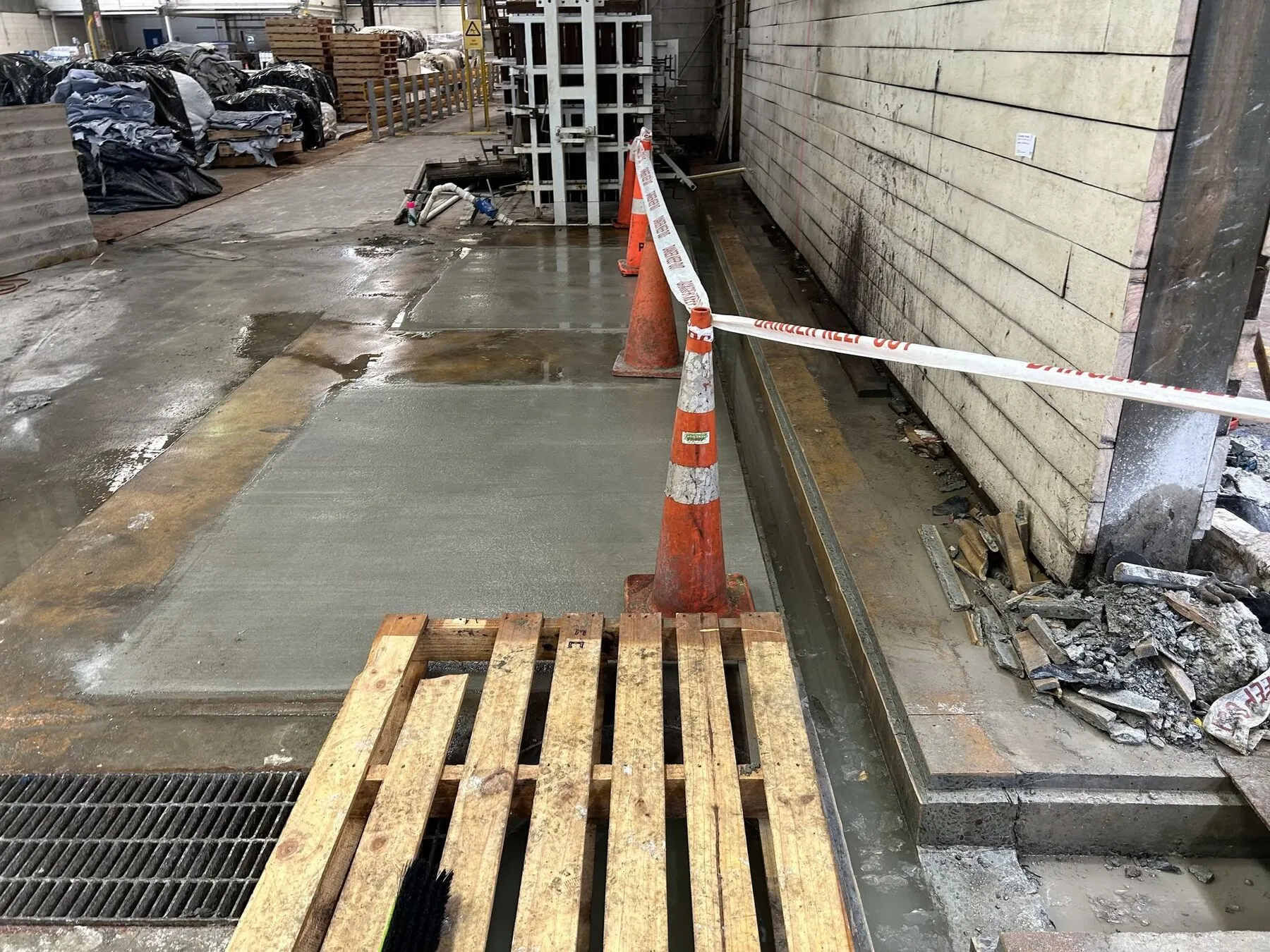
Chase and channel cutting
A narrow slice cut and the concrete removed, to form a trench for services. Floors and walls, drains, ducts, conduit and cable.
Chase cutting is slicing a narrow sliver out of concrete and removing it, to form a trench to access or install services: a drain, a duct, a conduit or a cable run, in a floor or a wall that is already there.
10 mm slots in floors and 30 mm slots in walls are common. Our deco blades sometimes cut a 10 or 20 mm slot for a cable or hose. Wider channels are quoted on site.
For plumbers: chase cutting, breaking out, core drilling and the slurry vac as one package, safe and clean inside a building.
When you need it
Common jobs for this service. If yours is not on the list, ask.
- A new drain line has to run through an existing floor with the grating sitting flush.
- A shower tray or a drain has to go into an existing floor.
- Conduit, data cable or pipework has to be buried in a slab rather than run across it.
- A services route has to be chased into a wall before it is lined or plastered.
- An existing drain or channel has to be widened, extended or relaid.
The numbers
- Floor slots
- 10 mm is common
- Wall slots
- 30 mm is common
- Cable or hose slots
- 10 or 20 mm
- Wider channels
- Quoted on site
- Indoor dust
- Extracted at the blade
- Slurry
- Vacuumed and taken away
A chase is set out to whatever has to sit in it, so tell us what is going in the slot.
Have this ready
None of it is compulsory. It is just the difference between one visit and two.
- What is going in the slot. The grating, channel, pipe or conduit and its dimensions set the width and the depth.
- The line and the falls, and the name of whoever signs them off.
- What is in the slab or the wall, if anyone knows. Scanning is available if nobody does.
- Who is doing the excavation, the fitting and the reinstatement, so the programme is agreed before we cut.
- Power, water and vehicle access, and whether the floor stays in use while we are there.
How we do it
The sequence on a normal job.
- Scan first if nobody knows what is in the concrete.
- Set out both edges with you, from the fitting that has to sit in the slot rather than from a nominal width.
- Cut the edges, then break out the concrete between them and clean the base back.
- Extract the dust at the blade, vacuum the slurry, and take both away with us.
Jobs like this one
Photographed on site and posted at the time.
What we get asked
How wide can you cut a chase?
10 mm slots in floors and 30 mm slots in walls are common, and our deco blades sometimes cut a 10 or 20 mm slot for a cable or hose. Wider channels are quoted on site.
Can you cut a channel in a floor that is still being used?
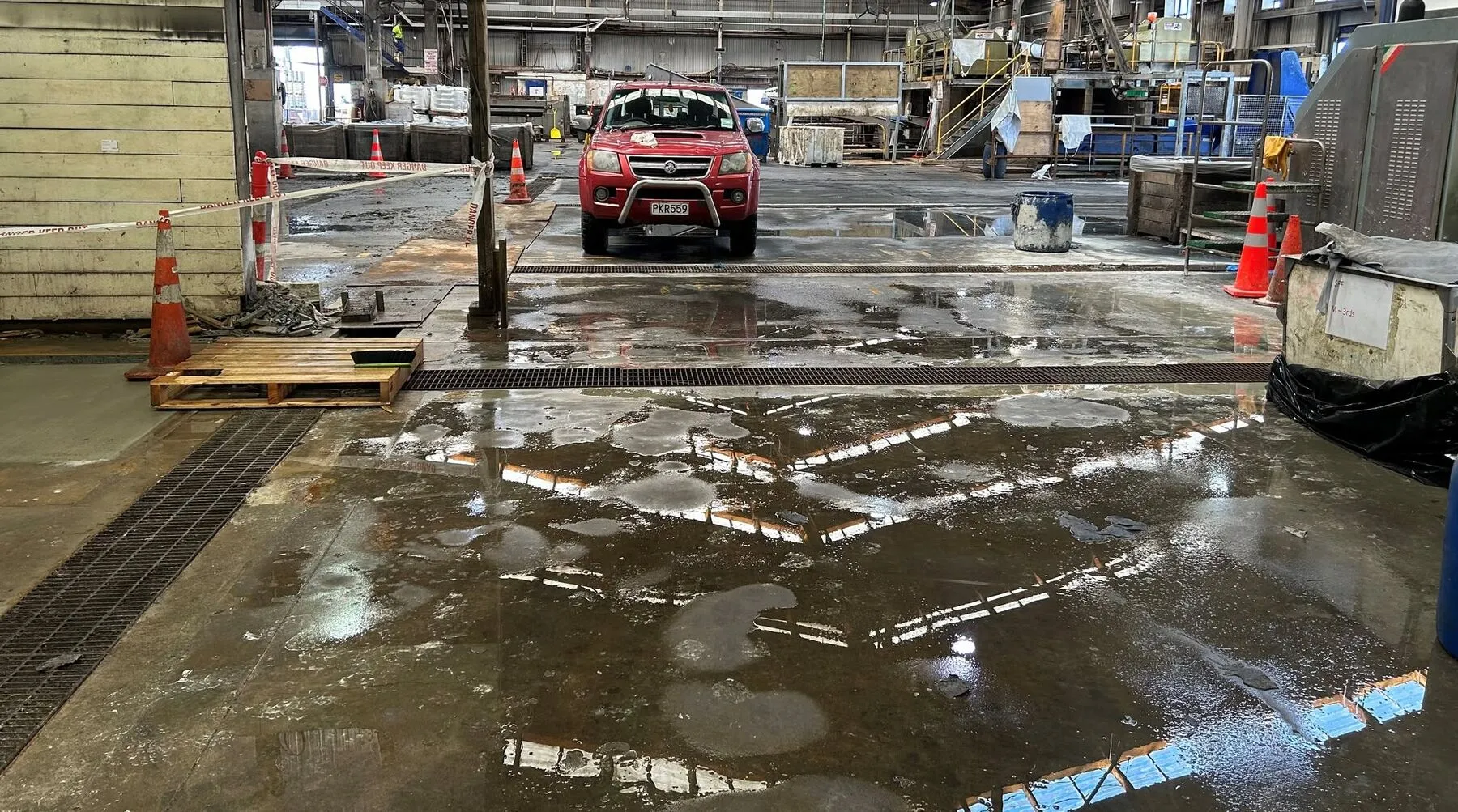
Yes. On the Timaru factory slot drain, the factory kept running the whole time we were there.
Can you chase a wall as well as a floor?
Yes. 30 mm slots in walls are common. Indoors, the dust is extracted at the blade and there are no petrol fumes in the building.
Do you fit the drain and reinstate the floor afterwards?
Ask at the outset and we will set the scope before anyone cuts. On the Timaru factory slot drain we cut and removed the floor slab, then formed and poured the drain itself to the grating the client supplied. On a straight services chase we cut, break out and clean the slot, and the fitting is done by the trade that owns it.
Timaru out to the Mackenzie
Timaru is the base, and we travel for the work.
- Timaru Our base
- Temuka South Canterbury
- Geraldine South Canterbury
- Ashburton Mid Canterbury
- Twizel About two and a half hours from Timaru
We also work across Mid Canterbury, North Otago and the Mackenzie.
Need chases and channels sorted?
Tell us where you are and what the job is, and we will tell you when we can be there.