Which one do you need

In plain terms

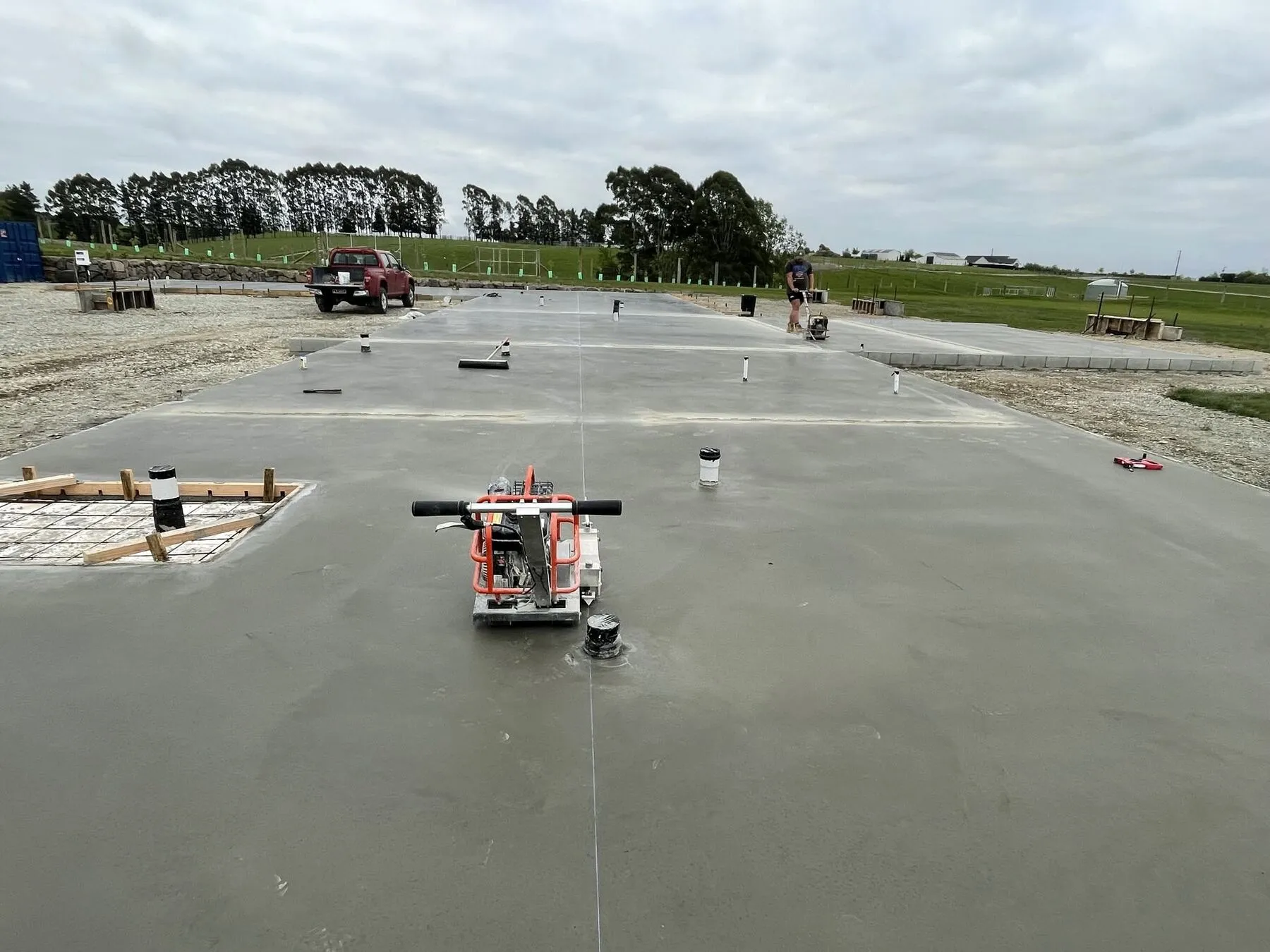
Floor and slab sawing

The bread and butter. Expansion cuts in a fresh pour, early entry soft cutting before the slab goes off, and full depth cuts through an existing floor for drainage, services or a section that has to come out. Indoors we run extraction at the blade so the building stays usable while we work.

Floor and slab sawing in detail

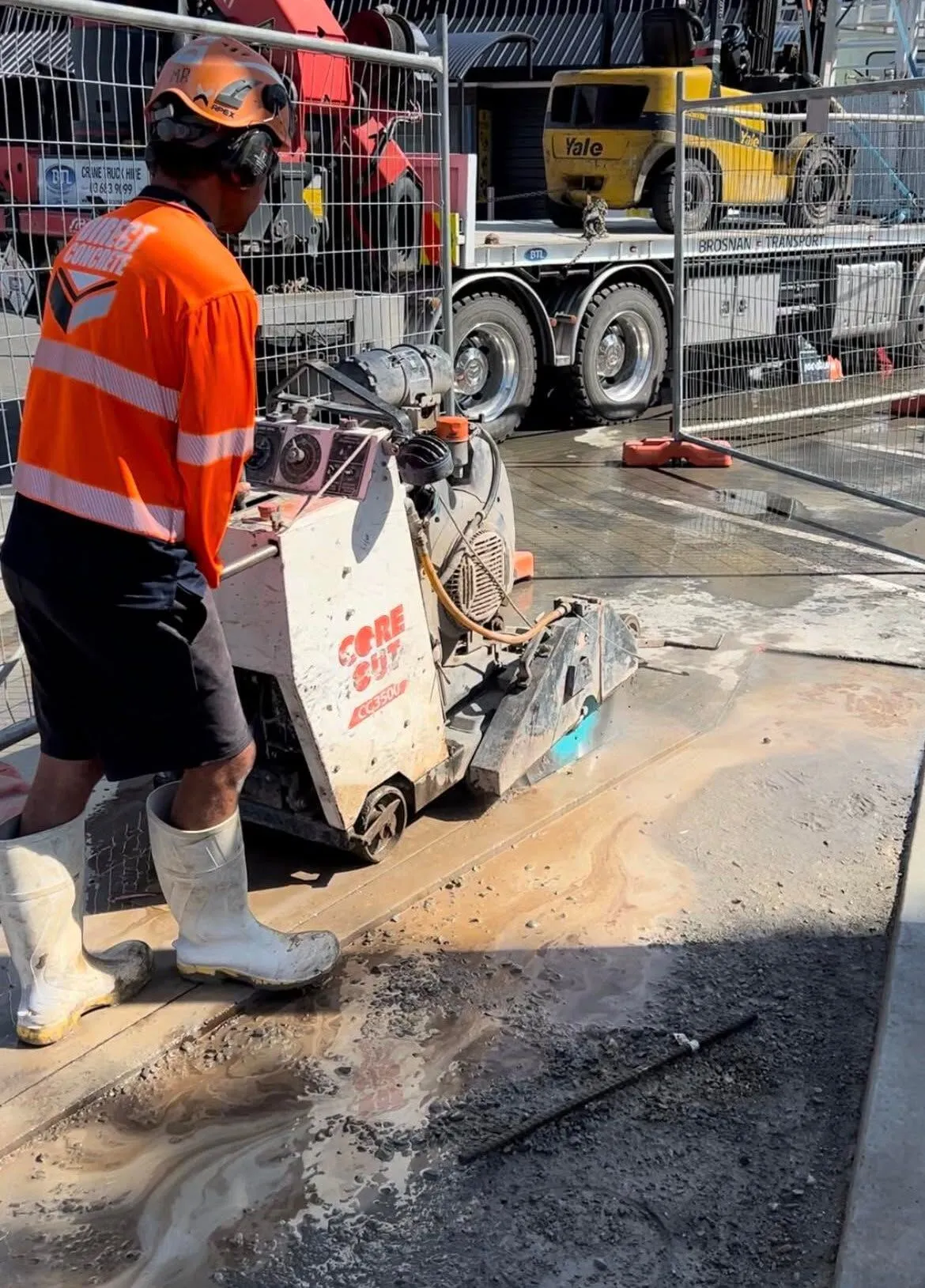
Road sawing

The big saw, for trenches, service runs, pothole removal and anything in a road, yard or hardstand. It takes 340 mm in a single pass, which is deeper than most jobs in this region ever need, and it means we are not stitching two cuts together and hoping they meet.

Road sawing in detail

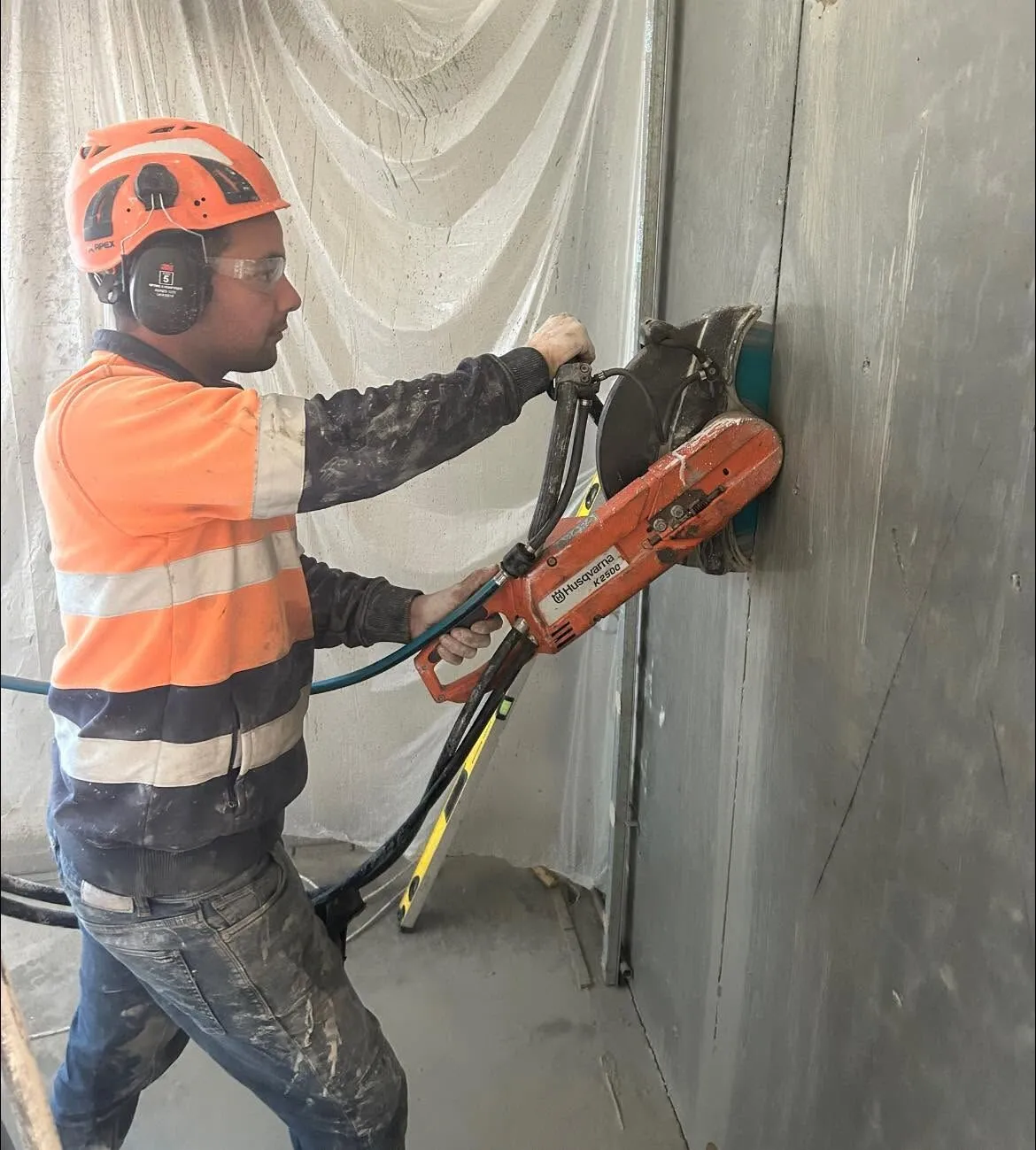
Wall sawing

Doorways, window openings and penetrations cut out of walls that are already standing. We pre cut with the ring saw so the lines are square and safe, then finish with the hydraulic saw: 220 mm from one side, 440 mm working from both. Concrete, block and heritage stone.

Wall sawing in detail

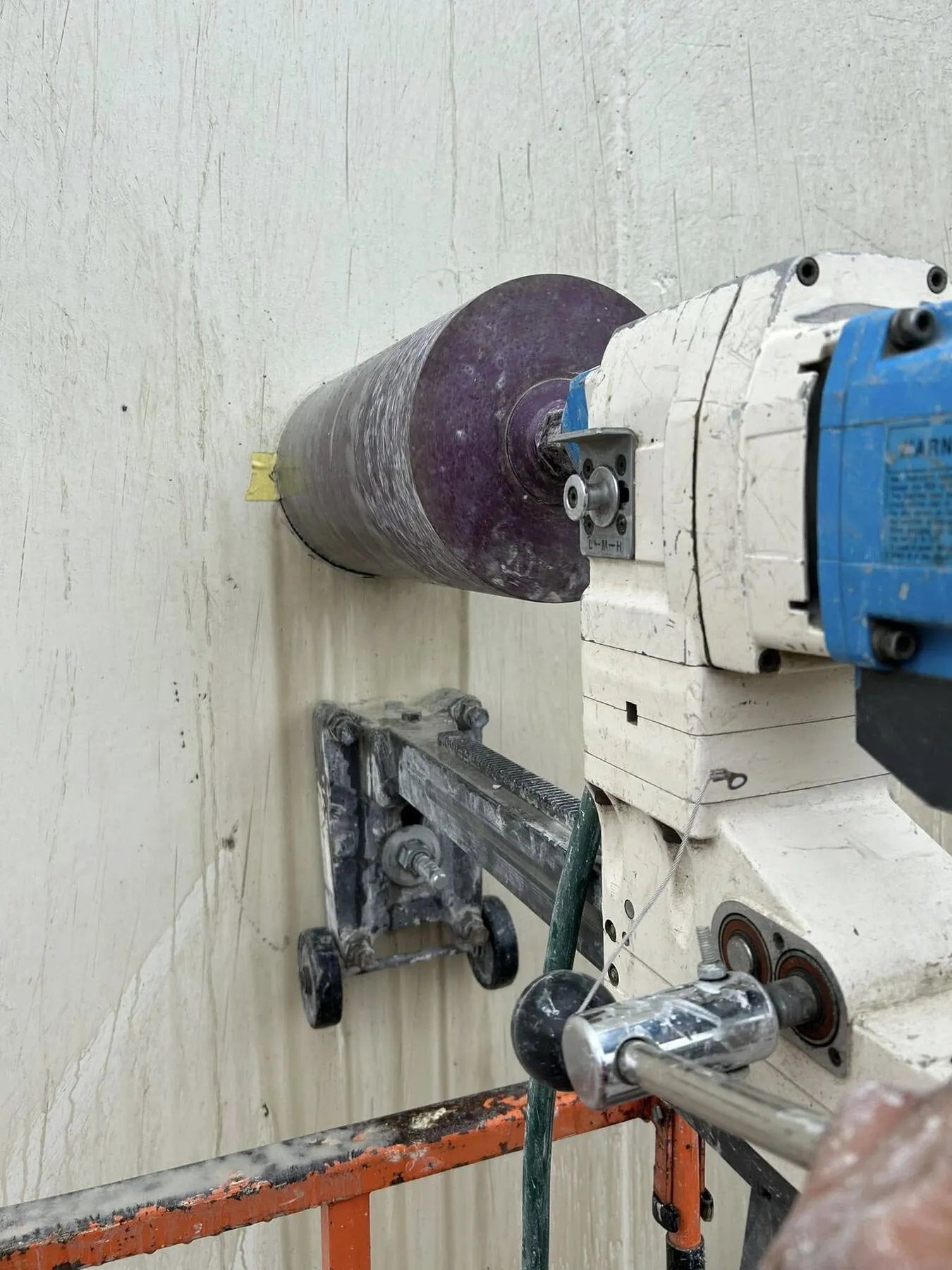
Core drilling

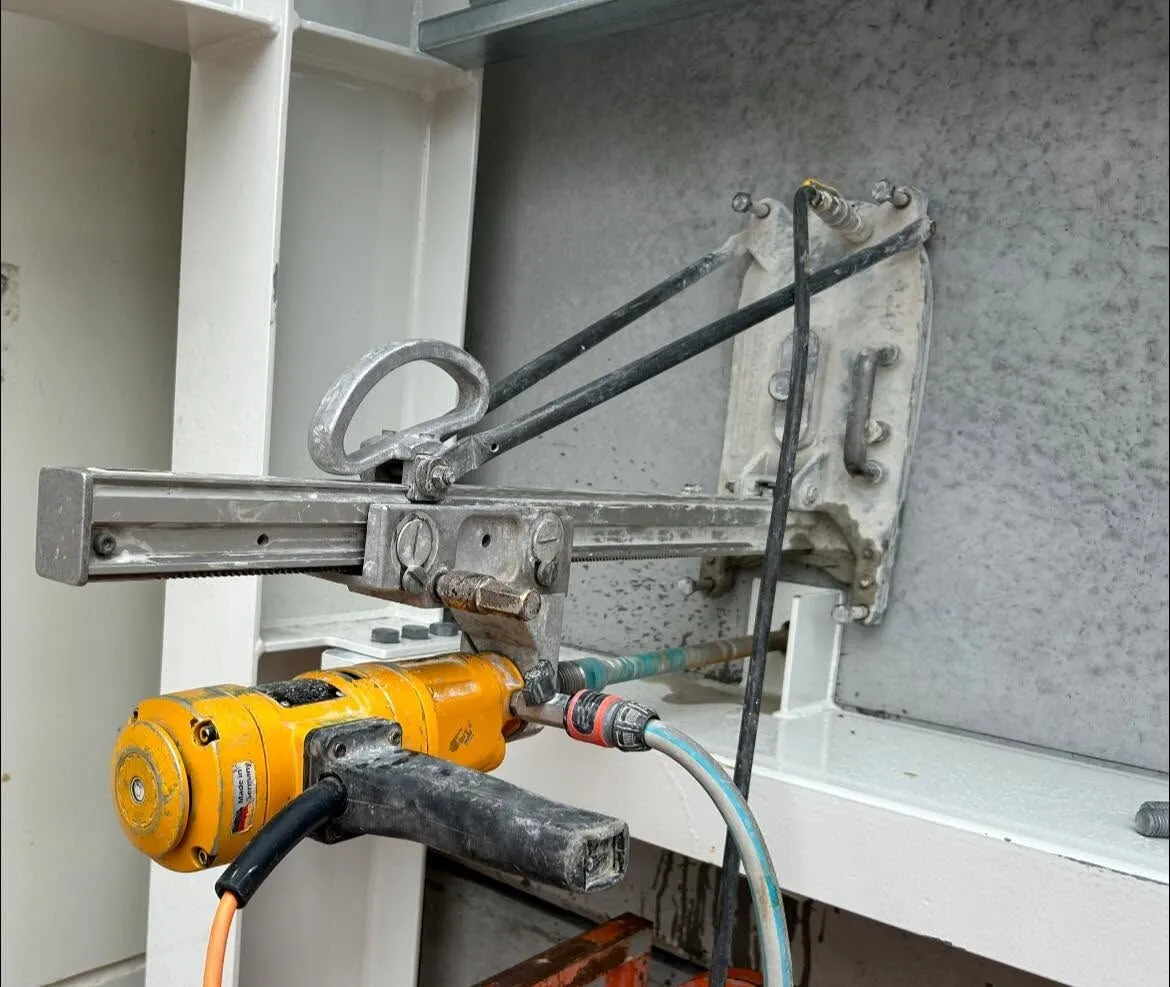
Clean round holes from 20 to 350 mm in diameter, typically to 400 mm deep, and further when we put extension bits on. Through reinforced slabs, brick, block and retaining walls, for pipes, ducting, cabling, extraction and drainage. Tight spaces are normal.

Core drilling in detail

Concrete scanning

What is in the slab before anyone cuts it. Reinforcing, conduit, post tension cable, underfloor heating. It takes a fraction of the time it takes to repair what you hit, and on a live site it is the difference between a booked job and an incident report.

Concrete scanning in detail

Concrete pumping

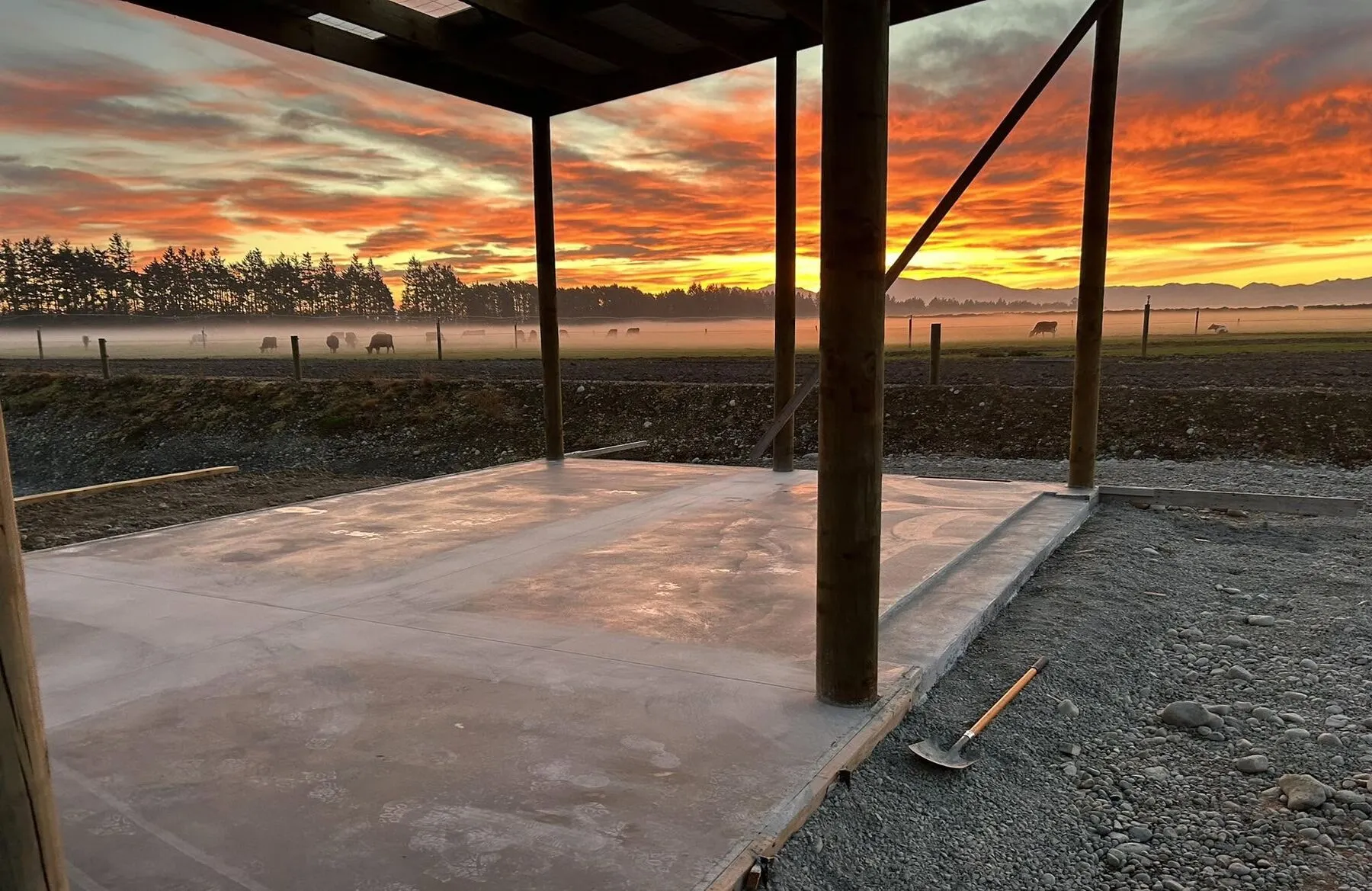
A line pump for the pours a truck cannot reach: around the back of a house, through a gate, over a fence, into a shed. It runs up to 100 m of line, which is a long way past where a boom stops. Small pours are welcome, they are the ones nobody else wants.

Concrete pumping in detail
The kit

What the gear will actually do

Deeper than most jobs in this region ever need, which is the point. It means we are not stitching two cuts together and hoping they line up, and it means we do not have to tell you halfway through that it is beyond us.

Everything runs on electric high frequency saws, three phase through an inverter. About 13 kg, roughly half the weight of a petrol saw, and no exhaust, which is what makes them usable inside an occupied building.

Across the fleet

Road saw depth, single pass
340 mm
Wall saw, cutting from one side
220 mm
Wall saw, cutting from both sides
440 mm
Core hole diameter
20 to 350 mm
Core depth, standard bits
400 mm
Line pump reach
100 m

Deeper and wider is often still possible. Ring and describe it rather than assuming it is not.

Where we work

Timaru out to the Mackenzie

We also work across Canterbury, North Otago and the Mackenzie. If the job is worth the drive, we will drive it.

Not sure which one it is?

Describe what is in front of you and we will tell you what it needs. Half the calls we get start with someone apologising for not knowing the right word for it.

Call 027 966 9505 Text Matt